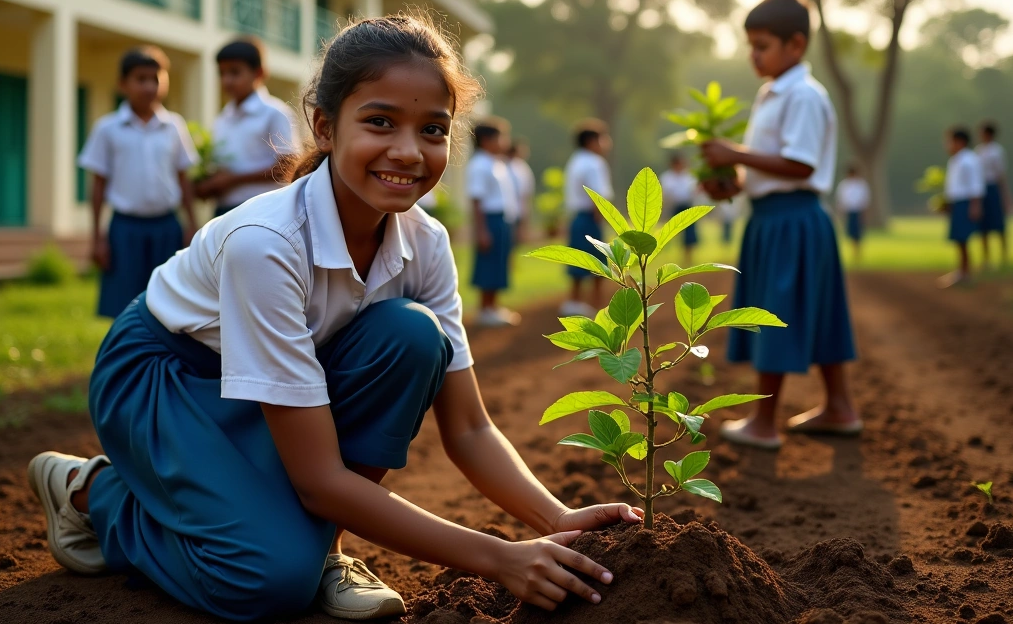
We are witnessing an ambitious environmental initiative as the Prime Minister launched a nationwide tree planting campaign across more than 29,000 secondary-level educational institutions. Tarek Rahman inaugurated this green program on June 29 from the Bangladesh-China Friendship International Conference Center in Sher-e-Bangla Nagar, Dhaka. As part of the government’s “One Child, One Tree” initiative, this program aims to achieve an ambitious target of planting 25 crore trees over the next five years. The Prime Minister urged students across the country to plant at least one tree annually, emphasizing their crucial role in combating climate change. This article explores how this comprehensive program will engage young minds in environmental conservation and examines the strategy behind achieving this massive reforestation goal.
Prime Minister Inaugurates Tree Planting Campaign Across 29,000 Schools
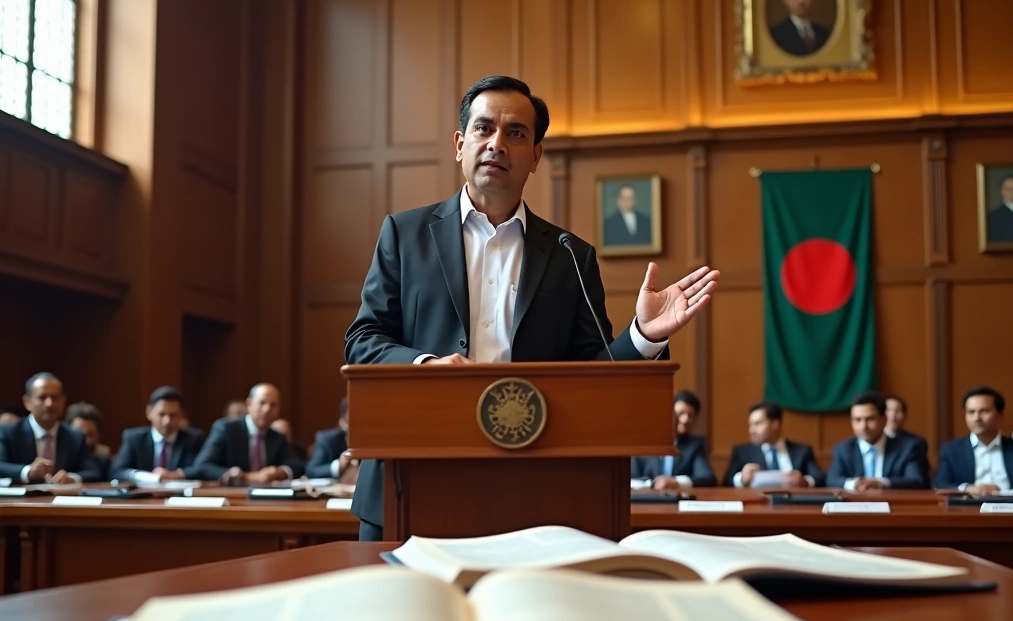
On Monday, Tarique Rahman performed the ceremonial planting of a sapling at the Bangladesh-China Friendship International Conference Center in Dhaka, marking the physical commencement of this nationwide initiative. The event operated under the theme ‘Bangladesh First – A Nation of Talent, Science, Entrepreneurship and Innovation’.
The scale of participation proved substantial, with nearly 90,000 saplings planted across the country on the inaugural day. Thousands of educational institutions participated virtually through live broadcasts on various government and private mass media. Selected schools connected directly with the Prime Minister via video conference during the ceremony.
To support implementation, the government allocated a climate grant of 5,000 Taka to each participating educational institution. This funding comes with specific planting requirements under the Learning Acceleration in Secondary Education (LAISE) project, managed by the Secondary and Higher Education Division of the Ministry of Education.
Each school must plant at least one fruit-bearing tree, one timber tree, and one medicinal tree using the allocated grant money. This requirement ensures diversity in tree species while serving multiple purposes for communities. The initiative forms part of fulfilling the government’s electoral manifesto commitment.
Students Receive Prime Minister’s Call to Plant Trees Annually
During the inaugural event, the Prime Minister addressed participating students with a personal request that goes beyond ceremonial tree planting. Tarique Rahman described students as the “gamechangers” for future Bangladesh, stating that the country’s progress in science, innovation, sports and global competitiveness will depend on the younger generation.
The Prime Minister made a direct appeal to students across the nation. “I want a gift from each of you. Every year, plant at least one tree wherever you live, study or play. That will be your gift to me and to the country,” he told the students. This personal framing transforms the environmental initiative from a government program into an individual commitment expected from every young person.
Tarique Rahman emphasized that environmental protection must become a shared responsibility as Bangladesh faces growing challenges from climate change, urbanization and environmental degradation. He explained that the government is investing in education, sports, culture, science and innovation because the future of Bangladesh belongs to the students. In addition to tree planting, schools and colleges will receive greater support for sports competitions, cultural activities and innovation programs.
The campaign will help create a greener Bangladesh while encouraging young people to take responsibility for protecting the environment.
How Will Bangladesh Achieve 25 Crore Trees in Five Years?
The massive afforestation program will be implemented over five years under the Ministry of Environment, Forest and Climate Change, with the first phase targeting the plantation of 1.5 crore saplings across 149 upazilas in 49 districts. In addition to government nurseries, saplings will be collected from various private nurseries while trees will be planted on khas land, char areas, along riverbanks, on both sides of roads and highways, in forest areas where there are no trees, and in the premises of government institutions across the country.
The program will be implemented in phases, planting 15 million trees in 2026, 135 million between 2027 and 2028, and another 100 million from 2029 to 2030. Furthermore, the initiative is valued at approximately BDT 1,500 crore and will generate up to 600,000 jobs by creating 10,000 nursery-based enterprises.
About 200 hectares of mangrove gardens will be created in the islands and coastal char areas of Chittagong, Bhola and Patuakhali districts. Under social forestry, 1.1 million saplings will be planted on the marginal land of roads, highways and embankments, with maintenance responsibilities assigned to local communities who will receive a large part of the money from the sale of these trees after the specified period.
The Climate Financing Budget Report indicates successful implementation could enable Bangladesh to earn nearly USD 120 billion annually from the sale of carbon credits generated through tree plantation activities alone.