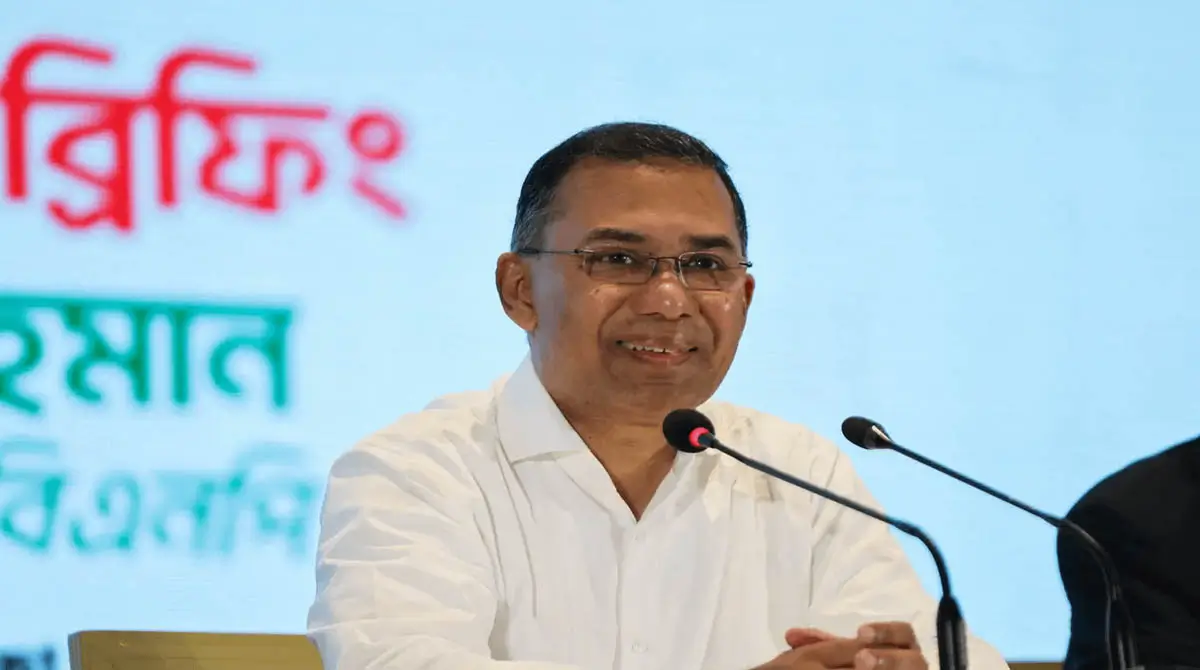
The government has formed a 15-member cabinet committee to launch the “Family Card” programme on a pilot basis in eight upazilas across Bangladesh’s eight divisions. The Cabinet Division issued a notification on Thursday, 19 February, confirming the formation of the committee.
The committee is chaired by the Finance Minister. It has been asked to submit a preliminary report by 24 February. The government aims to distribute the cards before the upcoming Eid al-Fitr.
The programme was one of the nine key pledges in the BNP manifesto for the Thirteenth National Parliamentary Election. It promises financial or food support to marginal and low-income families.
Under the plan, each eligible family will receive support worth up to Tk 2,500 per month. This may be given in cash or as essential food items such as rice, flour, lentils, and oil. The manifesto states that the amount of support will gradually increase over time.
The card will be issued in the name of the adult female member of the family. The government says women are the main managers of household expenses. Officials believe this approach will strengthen women’s role in family decision-making.
The government also describes the programme as a “social contract.” It says the goal is not charity but investment in people’s capacity. The long-term aim is to create a universal social protection system that will gradually cover all families, from the extremely poor to the middle class.
Work has started on drafting a policy for the programme. The Ministry of Social Welfare will lead the process. The Ministry of Finance, the Ministry of Local Government, and the Ministry of Women and Children Affairs will assist. According to relevant sources, policy drafting will begin next week.
Speaking to journalists on Thursday, Environment, Forest, and Climate Change Minister Abdul Awwal Mintoo said the issue is clearly outlined in the BNP election manifesto. He said discussions were held on how the programme would be implemented.
He added that the initiative would be introduced step by step and expanded nationwide. The committee is expected to finalise its preliminary recommendations by 24 February as the government prepares for the planned pre-Eid distribution.