Opinion
There’s a phrase that resurfaces year after year in education debates in Bangladesh, with every new policy: students are being used as guinea pigs. It’s not a new complaint. But rarely has a single month offered as much evidence of it as this one.
For the past few weeks, this publication has reported, in real time, on a series of exam-related disruptions affecting nearly every level of Bangladesh’s education system: primary school scholarships, secondary school exams (SSC and HSC), and university admissions. Each case, on its own, had its own explanation: a flood, a leak, a technical delay, a security issue. Taken together, they tell a different story: that of a system that continues to ask its youngest and most vulnerable students to bear the cost of its own lack of preparation.
Exhibit One: A Scholarship Result That Couldn’t Stay Settled
The results of the Primary School Scholarship Examination should have been cause for celebration for tens of thousands of ten- and eleven-year-olds. Instead, it became a case study in administrative fragility.
The results were postponed at the last minute due to technical problems. Before the rescheduled announcement could even be made, results from nine districts were leaked onto a working server—an incident serious enough to lead to the suspension of an official and trigger a formal investigation. When the results were finally released, families discovered that 3,254 of the 82,500 promised scholarships had simply not been awarded, without any prior explanation. Weeks later, tutors and teachers formed a human chain in Rajshahi following a new complaint: 238 students from a single school had not received any results at all.
None of these children asked to participate in a stress test of the examining body’s server infrastructure or its verification procedures. They were ten years old and taking their first major exam. The system was supposed to make that moment easier. He didn’t.
Exhibit Two: An HSC Season That Changed the Rules Mid-Match
If the scholarship saga was a minor setback, the 2026 HSC exam season was a devastating blow.
Bangladeshi’s examination boards introduced a unified exam this year—a genuine and well-intentioned reform. However, when floods struck Chattogram and its surrounding areas, the response became a cautionary tale of inconsistency: one-day postponements stretched to three-day suspensions, then to an indefinite standstill, while elsewhere test-takers sat for their exams waist-deep in water, some arriving at centers by boat. One Physics exam was found to contain questions with such egregious errors that it warranted a complete remark for all test-takers nationwide. Reports of exam errors and center mismanagement emerged in numerous districts, leading to the dismissal and suspension of officials in real time, after the exams they were responsible for had already taken place.
The test-takers’ response was extraordinary and revealing. They did not simply protest; Many protested and yet entered the exam room, because refusing to take the exam risked being blamed for their own disadvantage. A group of Chattogram students who had fought to have their exams suspended returned days later to ask for them to be reinstated, not out of confusion, but because an indefinite suspension without a set procedure is harmful in itself. They understood something the system seemed to ignore: that both recklessly continuing and indefinitely suspending exams can harm a student, and that what they really needed was competition, not a constant swing between extremes.
Exhibit Three: A Result Date That Kept Retreating
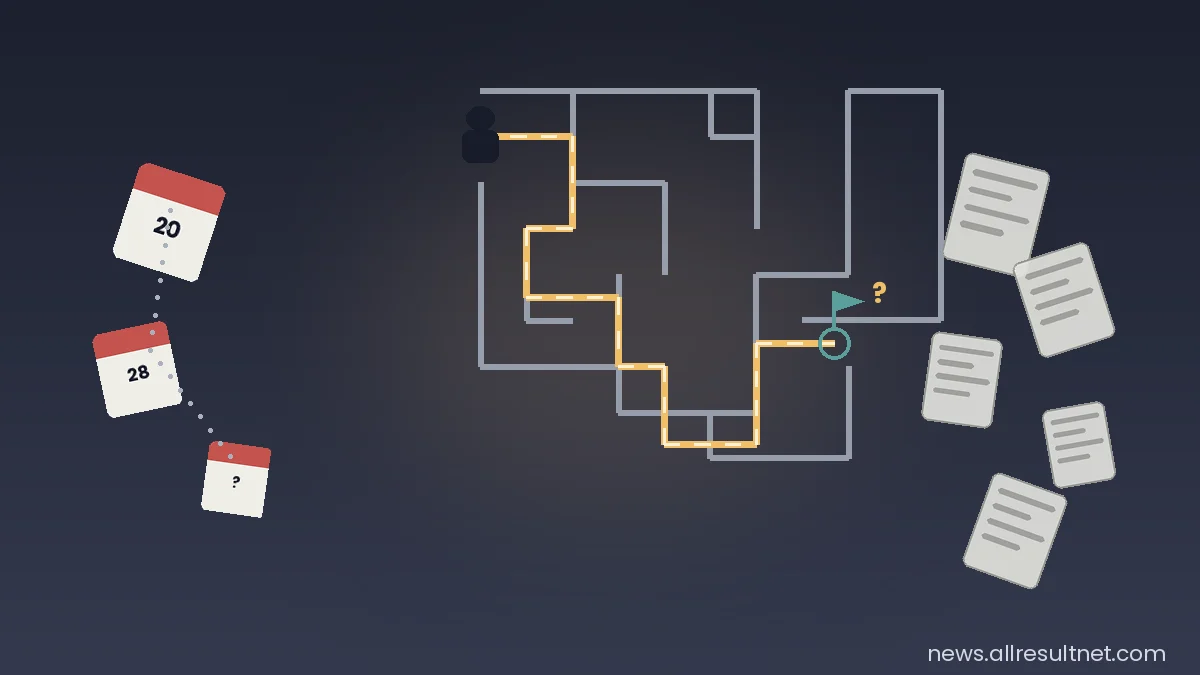
Then there are the SSC results, announced for July 20 at a press conference given by the Minister of Education himself in June. As July 20 approached, the examination boards confirmed they would not be published, citing “administrative burden”—a euphemism, as the coordination committee itself admitted, for the HSC crisis described earlier, which was consuming the resources needed to finalize the SSC results simultaneously. The new target was “end of July.” Days later, a more specific statement arrived: the boards expected to finalize the results on July 28 or 29, after which the ministry would decide on the final publication date, a process that still has no deadline.
For more than 1.85 million students who took the SSC exam, this has meant weeks of readjusted expectations, based on a sequence of dates that replaced the previous one. A generation raised on the upheavals of the pandemic era is once again forced to consider uncertainty as the new normal.
Exhibit Four: A Calendar Reform That Nearly Moved Too Fast
Even the system’s genuinely good ideas have shown signs of this same instinct. The plan to move the Second Summer School (SSC) to January and the High Summer School (HSC) to June—narrowing the gap between finishing school at age 18 rather than extending it to age 20—is sound in principle. But its initial draft aimed to compress the calendar by almost four months in a single year, before students, teachers, and tutors objected at a stakeholder meeting and secured a more phased-in schedule. The instinct to act quickly, evidently, had to be tempered by the very students who would have been affected.
What Connects These Stories
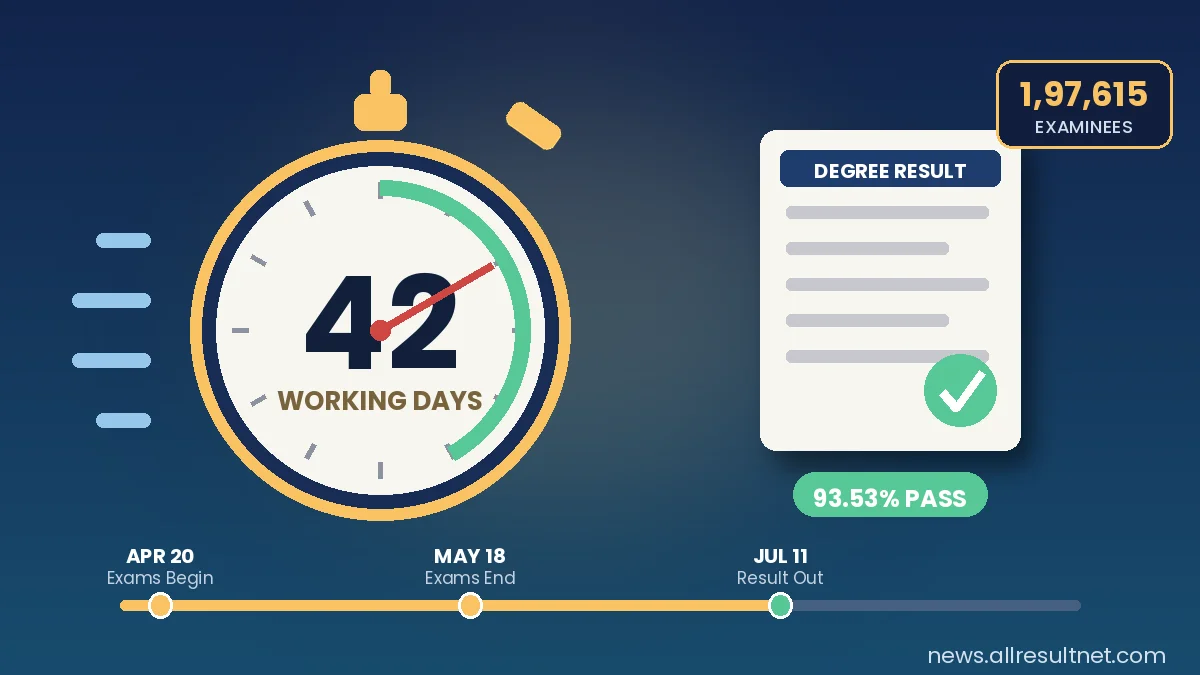
It would be unfair to say that nothing has gone right this month. The government’s response to the HSC crisis included real concessions: make-up exams for students affected by the floods, top marks for exams with errors, and unusually swift disciplinary action against those responsible. The National University published degree exam results in a record 42 working days, despite an 11-day holiday period in the middle of the process. Rajshahi University, at the initiative of its students, protected the right of young mothers to sit for exams. These are not minor achievements and deserve recognition.
But let’s take a closer look at what they have in common: almost all of this month’s positive outcomes came only after students organized, protested, petitioned, or otherwise pressured the system. The default attitude was not one of care, but of reaction. The good decisions emerged as concessions obtained under pressure, not as the initial stance of an institution that had already planned for the future of the young people in its care.
That is precisely the meaning of being treated like a guinea pig: not cruelty, but neglect. A guinea pig in an experiment doesn’t need to be mistreated to be considered a guinea pig; it simply needs to be the one absorbing the uncertainty of a process that someone else is still figuring out.
What Would Actually Change This
None of this month’s individual failures required extraordinary foresight to avoid. A published contingency plan for the flood-season exams would have prevented the daily disruption caused by the HSC postponement. A results system with basic redundancy checks would have detected 238 missing marks before parents had to mobilize to claim them. A realistic results schedule with a safety margin—rather than one announced without any margin for the very disruptions the ministry was simultaneously managing—would have made the SSC delay a minor issue instead of a drawn-out drama.
None of these solutions are extravagant. They are the basic discipline of institutions that prepare for things to go wrong, rather than institutions that improvise after they have already happened.
Students are not stress tests. They are not, as a recurring complaint in Bangladesh’s education debate claims, guinea pigs for a system to learn from its own mistakes. They are, in the most literal sense possible for any country, its future: they arrive at the mercy of the system year after year, generation after generation, absorbing the cost of every unfinished plan. The headline question is not rhetorical. It has an answer, and the answer is a number: it will continue to happen as many times as necessary until planning replaces improvisation as the norm. This month, the country had ample evidence of the problem. What it does with that evidence, in the months leading up to the next exam season, is the only part of this story that has yet to be written.
This is an opinion piece reflecting on this publication’s own verified reporting over the past month. It does not represent the official position of any government body or education board.